The Job, Rewritten
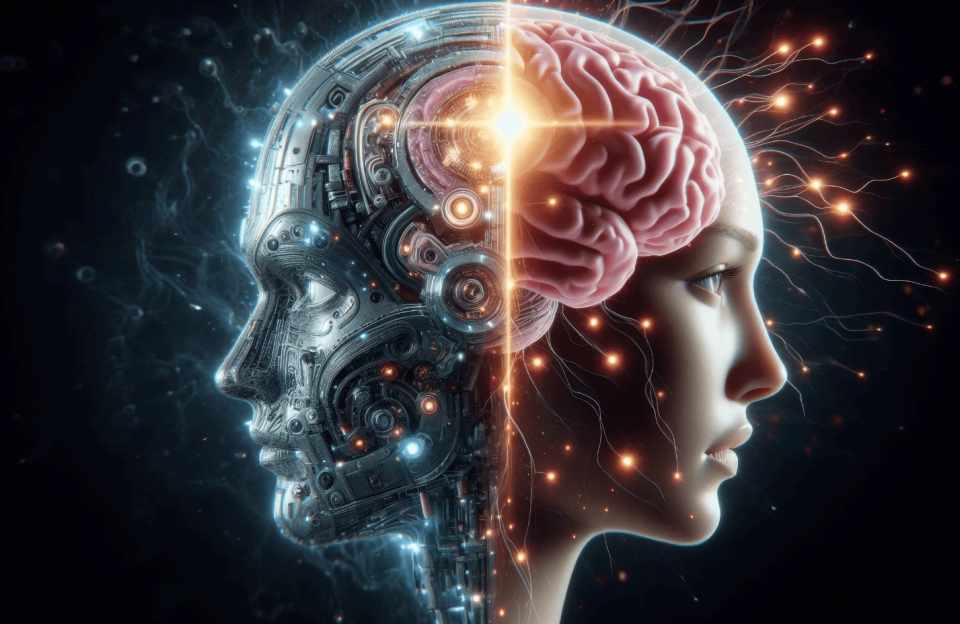
Every previous wave of automation took the hands and left the head. The loom, the assembly line, the spreadsheet, each absorbed some physical or clerical task and freed, or displaced, the people who used to do it, while leaving the distinctly human work of judgment, language, and persuasion alone. That was the deal, and we built a whole theory of the future on it: machines do the routine, humans do the thinking, education is the bridge between them, send everyone to college and the bargain holds.
The current wave is breaking that deal, because for the first time the machines are coming for the head. Systems that write, summarize, analyze, code, draft, diagnose, and argue are aimed squarely at the cognitive, white-collar, credentialed work we told two generations was the safe high ground. This does not mean the sky is falling; predictions of imminent mass unemployment have a poor track record, and the more honest near-term picture is messier and more interesting than collapse. But it does mean the old map is wrong, and three institutions built on that map, education, the military, and democracy itself, are going to be reshaped whether or not they choose to be.
The shape of the disruption
It helps to be precise about what is actually changing, because the loudest framings are also the least useful. "AI will take your job" and "AI is just a fancy autocomplete" are both wrong in the same way: they treat the technology as a thing that either replaces a worker wholesale or does nothing. The reality, so far, is that it replaces tasks, not jobs, and it does so unevenly. A job is a bundle of tasks; when a tool absorbs some of them, the job changes shape rather than vanishing. The lawyer still practices law, but the first draft of the brief takes twenty minutes instead of two days. The programmer still ships software, but spends less time typing boilerplate and more time deciding what to build.
The interesting and slightly counterintuitive pattern in early studies is that these tools often help the less experienced more than the experts. They raise the floor faster than the ceiling, compressing the gap between a novice and a veteran by handing the novice a competent first attempt at things that used to take years to learn. That sounds democratizing, and partly it is. But it also quietly threatens the bottom rung of the career ladder, the junior role whose entire function was to do the routine work badly until they learned to do it well. If the machine does the routine work competently from day one, where does the next generation get the reps that turn them into the experts the system still needs? We have not answered that, and it is one of the genuinely hard problems underneath the cheerful productivity numbers.
Education: from stocking knowledge to using it
Education is the institution most obviously caught flat-footed, and the panic over students using AI to cheat, while real, is the least important part of the story. The deeper challenge is that schooling was largely designed to load knowledge and procedures into human heads, to make you into a competent stock of facts and methods you could later deploy. When a tool can produce a passable essay, a working function, or a tidy summary on demand, the value of being a walking repository of those outputs falls, and the value of something else rises: the judgment to know what to ask, the taste to tell good output from plausible nonsense, and the skill to verify, to integrate, to decide.
This is not the death of learning; it is a shift in what learning is for. The student who cannot write at all will not be able to tell whether the machine's writing is any good, just as a person who never learned arithmetic cannot catch the calculator's error. The foundational skills matter more than ever, precisely because they are now the basis for supervising a tool rather than the final product themselves. The hard pedagogical question is how to keep teaching those foundations when the path of least resistance for every student is to skip the struggle that builds them. Struggle is how skill is made, and we have just handed everyone a frictionless way to avoid it. Schools that figure out how to preserve productive struggle, to make the human do the cognitive work that matters even when a machine could shortcut it, will produce people who can use these tools well. Schools that don't will produce people the tools can replace.
The military: speed, and the question of the human
In defense, the implications are sharper and the stakes higher, because the relevant quality is not productivity but decision speed in conflict. Modern military thinking is increasingly organized around the loop of observing, orienting, deciding, and acting faster than your adversary. Machine systems that can process sensor data, identify targets, and recommend actions in fractions of a second promise an enormous advantage in that loop, and create an enormous pressure, because if your adversary's loop is faster than yours, hesitation is defeat.
That pressure runs directly into the deepest question the technology raises anywhere: how much to keep a human in the decision. There is broad, if uneven, agreement that a person should remain meaningfully in control of decisions to use lethal force, "meaningful human control" is the phrase of art. But the same speed that makes the systems valuable is what erodes that control, because a human who must approve every action becomes the slow component, the bottleneck the enemy exploits. The temptation to delegate more and more of the loop to the machine, in the name of not losing, is structural and powerful, and it does not depend on anyone being reckless. It is the logic of competition itself, and it pushes toward exactly the outcome, autonomous systems making consequential decisions at machine speed, that almost everyone, asked directly, says they do not want. The arms-race dynamic here is not a failure of good intentions. It is what good intentions produce when each side fears the other will move first.
Democracy: the epistemic ground shifts
The effect on democracy is the most diffuse and possibly the most consequential, because it operates not on jobs or weapons but on the shared sense of what is true. Self-government rests on a quiet assumption: that citizens can, with effort, find out roughly what is going on, distinguish real events from invented ones, and trust some evidence of their own eyes and ears. The technology strains all three.
It is not mainly that AI enables lies; people lied before. It is that it collapses the cost of producing persuasive, customized, large-scale falsity, and, more corrosively, that it gives everyone permission to disbelieve anything inconvenient. When any image might be generated, any recording might be faked, any account might be a machine, the immediate danger is not that people believe the fakes. It is that they stop believing the real, because doubt is now always available and always defensible. A genuine video of wrongdoing can be waved away as a possible fabrication; a true report can be dismissed as machine-generated noise. The shared epistemic floor, the patch of reality everyone could be argued back onto, gets harder to stand on, and democracy without a shared floor degrades into rival realities that cannot negotiate because they do not agree on what happened.
None of this is foreordained, and the same tools can inform as easily as they can deceive; technologies are not destinies. But the burden falls on institutions, courts, newsrooms, election systems, the slow human machinery of establishing facts, to become more robust exactly as the cost of attacking them drops, and institutional robustness is not something you can summon overnight.
Who gets the gains
There is a question lurking under all of this that economics, not technology, will answer: who captures the value the tools create. A productivity gain is not, in itself, good news for the people whose productivity rose. It can flow to workers as higher wages and shorter hours, or to consumers as cheaper goods, or to owners as fatter margins, and which of these happens is not determined by the technology. It is determined by bargaining power, policy, and how the gains are distributed, by politics, in the broad sense, not by the machine.
History is not reassuring on this point, and it is not damning either; it is mixed in a way that should make both the optimists and the doomsayers uncomfortable. The early factory decades delivered enormous aggregate growth alongside genuine immiseration for the workers caught in the transition, and it took the better part of a century, plus a great deal of organizing and legislation, before the broad gains we now take for granted arrived. The lump-of-labor fear, the idea that there is a fixed amount of work and machines are eating it, has been wrong every time, because new work keeps appearing in forms no one predicted. But "wrong in the long run, for the aggregate" is cold comfort to a specific person in a specific decade whose specific occupation is being hollowed out faster than the new work arrives, and who does not get to live in the long run or spend the aggregate.
So the live question is not whether the tools create value; they plainly do. It is whether the institutions that determine distribution, labor markets, education, tax and transfer, whatever new arrangements we have the imagination to build, adapt fast enough that the gains are broadly shared rather than narrowly captured. A technology that could in principle lift everyone can, under the wrong arrangements, simply concentrate wealth and leave the displaced behind. That is not a prediction. It is the choice in front of us, and it is a choice, which is the most important thing to understand about it.
The honest conclusion
The temptation is to end with a confident forecast in one of the two available flavors, utopia or catastrophe, and both would be lies, because the honest position is that we do not know, and the outcome is not a property of the technology but of the choices we make around it. What we can say is that the comfortable old bargain, where machines took the hands and left the head, is over, and that the institutions we built on it were not designed for a tool that reaches into cognition itself.
The work ahead is not to predict the future but to keep certain things human on purpose: the struggle that builds real skill, the judgment that supervises a powerful tool, the person in the loop when lives are at stake, the shared floor of fact that lets a free people argue and still govern themselves. None of those will survive by default. The technology is genuinely powerful, which is exactly why the question that matters is not what it can do, but what we will insist on continuing to do ourselves.